Cream Puffs Recipe: How to Make 18 Crisp Choux Puffs at Home
Few bakes deliver as much drama for as little shopping as cream puffs. A short list of pantry ingredients — water, butter, flour, eggs — goes into the oven as soft blobs of dough and comes out as golden, hollow shells with crisp walls, ready to be filled with billows of vanilla cream. The method is genuinely learnable in one afternoon, and the rules are simple: dry the dough properly on the hob, add the eggs gradually, and never open the oven door too soon.
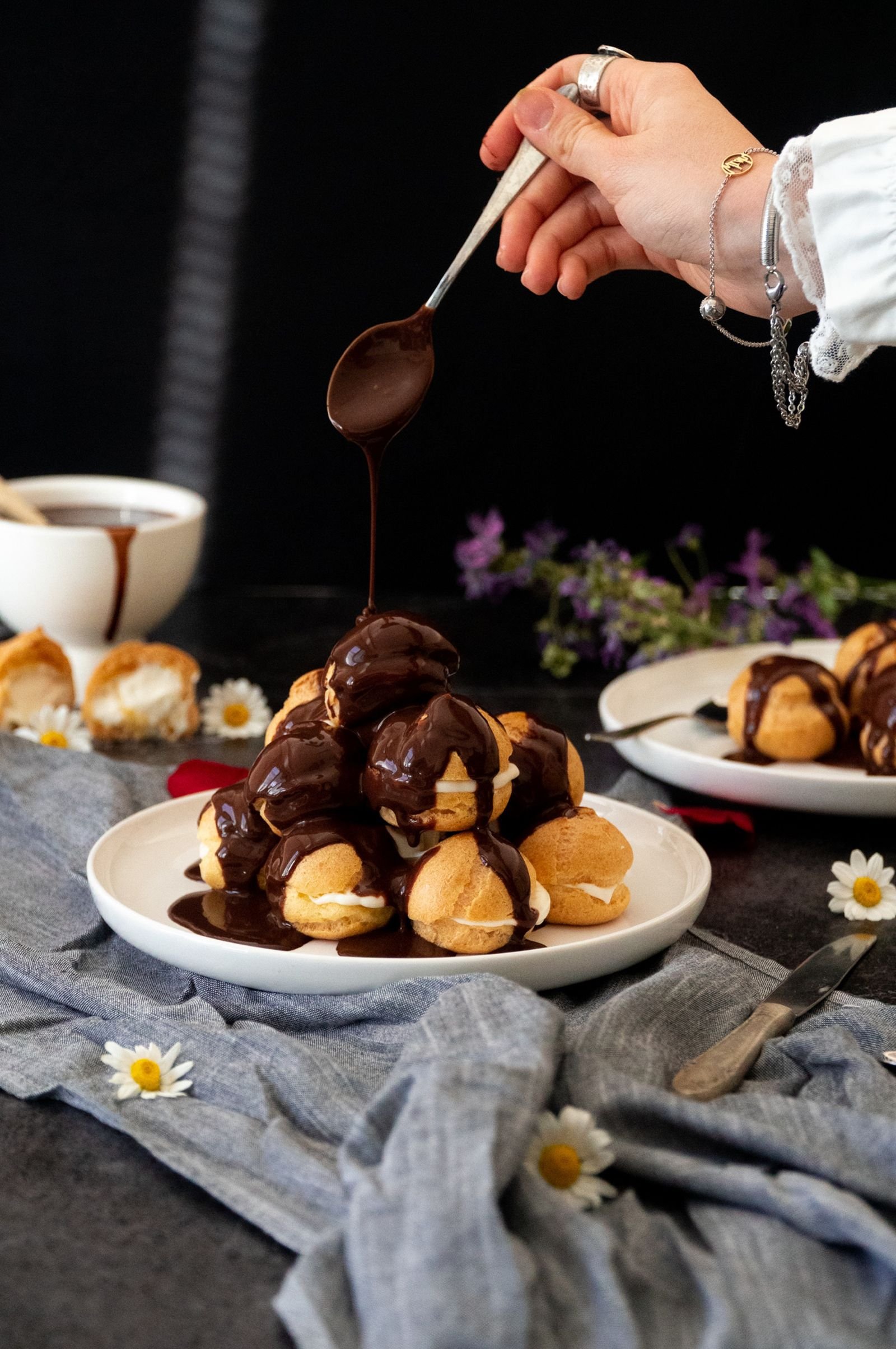
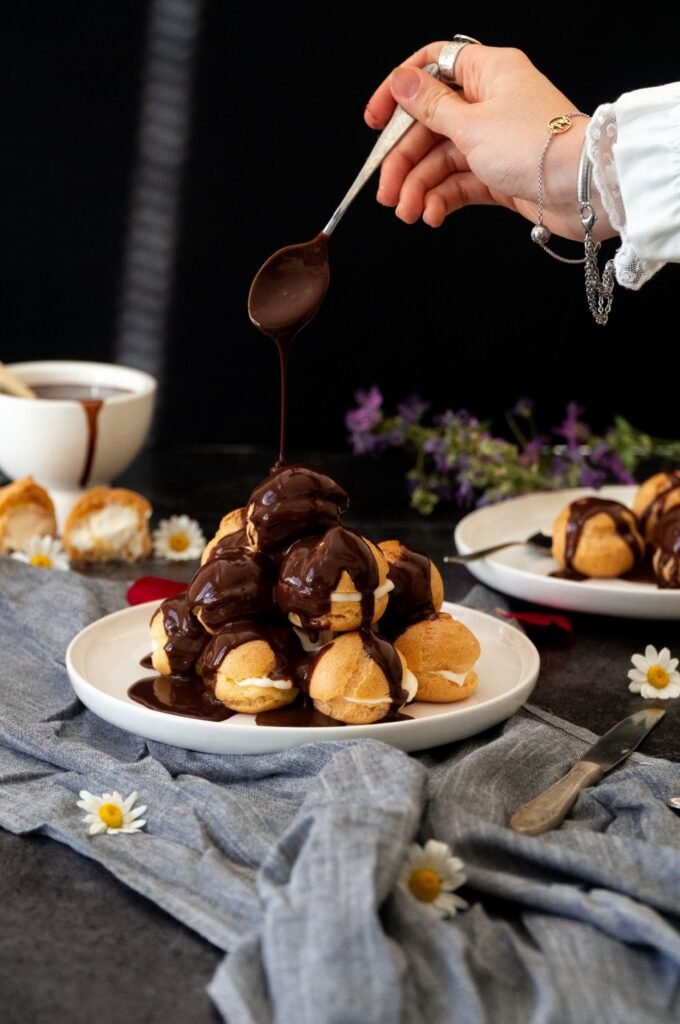
This recipe makes about 18 medium cream puffs, filled with lightly sweetened vanilla chantilly and finished with a glossy chocolate glaze — though a snowfall of icing sugar is every bit as classic. A proper pastry cream alternative is included below if you prefer the traditional custard filling. Weigh the ingredients if you can; choux rewards accuracy, especially with the eggs.
Recipe at a Glance
- Prep time: 30 minutes, plus 20 minutes cooling
- Cook time: 30–35 minutes
- Total time: about 1 hour 45 minutes
- Yield: about 18 medium puffs (5 cm / 2 in shells)
- Difficulty: Medium — simple steps, but eggs and bake need attention
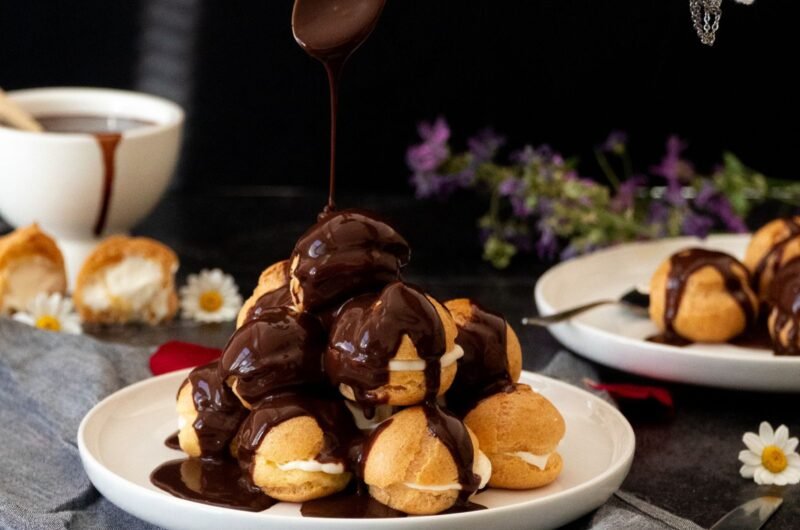
Cream Puffs
Course: Desserts Recipes18
servings30
minutes35
minutesCrisp golden choux shells filled with vanilla chantilly cream and finished with a glossy chocolate glaze.
Ingredients
250 ml water
100 g unsalted butter, cut into cubes
1 tsp caster (superfine) sugar
½ tsp fine sea salt
150 g plain (all-purpose) flour, sifted
4 large eggs (about 200 g without shells), beaten
480 ml double (heavy) cream, well chilled
40 g icing (powdered) sugar, sifted
2 tsp vanilla extract
100 g dark chocolate (60–70% cocoa), finely chopped
100 ml double (heavy) cream, for the glaze
10 g unsalted butter, for the glaze
Directions
- Heat the oven to 200°C (400°F / Gas Mark 6) and line a baking sheet. Bring the water, butter, sugar and salt to a rolling boil.
- Off the heat, tip in all the flour and beat to a smooth paste; return to medium heat and stir for 2–3 minutes until the paste films the base of the pan.
- Cool the paste for 3–4 minutes, then beat in the eggs gradually until the dough is smooth, glossy and falls slowly from the spoon in a V shape.
- Pipe 18 mounds about 5 cm wide onto the lined sheet and smooth any peaks with a wet finger.
- Bake at 200°C for 20 minutes without opening the door, then at 180°C (350°F) for 10–15 minutes until deep golden and hollow-sounding.
- Pierce each puff, dry for 5 minutes in the switched-off oven with the door ajar, then cool completely on a rack.
- Whip the chilled cream with the icing sugar and vanilla to soft-medium peaks and pipe into the shells, about 2–3 tablespoons per puff.
- For the glaze, pour steaming cream over the chopped chocolate, rest 2 minutes, stir until glossy and stir in the butter; dip the top of each filled puff and leave 10 minutes to set.
Notes
- Unfilled shells keep 2 days in an airtight container or 1 month frozen; recrisp for 5 minutes at 180°C before filling. Fill on the day of serving.
Ingredients
Choux pastry has a fixed logic: the liquid hydrates the flour, the butter enriches it, and the eggs provide the steam and structure that puff the shells. Eggs vary in size, so Step 4 explains how to judge whether your dough needs the last of the egg.
For the choux pastry
- 250 ml (1 cup) water
- 100 g (7 tbsp / scant ½ cup) unsalted butter, cut into cubes
- 1 tsp caster (superfine) sugar
- ½ tsp fine sea salt
- 150 g (1¼ cups) plain (all-purpose) flour, sifted
- 4 large eggs, about 200 g without shells, at room temperature, beaten
For the vanilla chantilly cream
- 480 ml (2 cups) double (heavy) cream, well chilled — choose cream with at least 35% fat
- 40 g (⅓ cup) icing (powdered) sugar, sifted
- 2 tsp vanilla extract, or the seeds of 1 vanilla pod
For the chocolate glaze (or dusting)
- 100 g (3½ oz) dark chocolate, 60–70% cocoa solids, finely chopped
- 100 ml (scant ½ cup) double (heavy) cream
- 10 g (2 tsp) unsalted butter
- Or, instead of glazing: 2 tbsp icing (powdered) sugar, for dusting
Equipment
- Medium heavy-based saucepan
- Wooden spoon or sturdy heatproof spatula
- Mixing bowls, including one large
- Electric hand mixer or stand mixer (optional)
- Baking sheet lined with baking parchment, or a silicone mat
- Piping bag fitted with a plain 1.5 cm (½ in) round nozzle, or two spoons
- Small plain nozzle or a skewer, for filling holes
- Wire cooling rack
- Kitchen scales — strongly recommended for choux
Method, Step by Step
Step 1 — Heat the oven and prepare the trays
Heat the oven to 200 °C (400 °F / Gas Mark 6), with a rack in the middle. Line a large baking sheet with baking parchment; a dab of dough in each corner stops the paper sliding as you pipe. Have everything weighed and ready before you start: once the panade is cooking, the method moves quickly.
Step 2 — Boil the water and butter
Put the water, butter, sugar and salt in the saucepan over medium heat. Warm gently until the butter has completely melted, then bring to a full rolling boil — the butter must be fully melted before the boil, or your liquid ratio changes. The moment it boils, take the pan off the heat.
Step 3 — Add the flour and dry the panade
Tip all the flour into the pan in one go and beat vigorously until it forms a thick, smooth paste with no dry flour visible. Return the pan to medium heat and keep stirring and pressing the paste against the base for 2–3 minutes. This drying step is the first secret of puff that actually puffs: it cooks out excess water so the dough can absorb more egg. The paste is ready when it leaves a thin film on the base of the pan and looks slightly matte.
Step 4 — Cool slightly, then add the eggs gradually
Tip the paste into a large bowl and spread it out; let it cool for 3–4 minutes, until warm but no longer steaming heavily — eggs added to a boiling-hot paste will scramble. Add the beaten egg in three or four additions, beating hard each time until fully absorbed; the paste looks slippery and separated at first, then comes back together. You may not need every drop: the dough is ready when it is smooth and glossy and falls slowly from the spoon, leaving a V shape hanging for a few seconds. Too stiff and it will not expand; too runny and it spreads into puddles.
Step 5 — Pipe the puffs
Spoon the dough into the piping bag and pipe 18 mounds about 5 cm (2 in) wide and 3 cm (1¼ in) tall, spaced well apart — they roughly double in size. Hold the bag vertically, squeeze without moving it, and finish each mound with a quick flick to one side. No piping bag? Use two spoons to drop neat mounds. Dip a finger in water and smooth down any peaks; a pointed tip burns first.
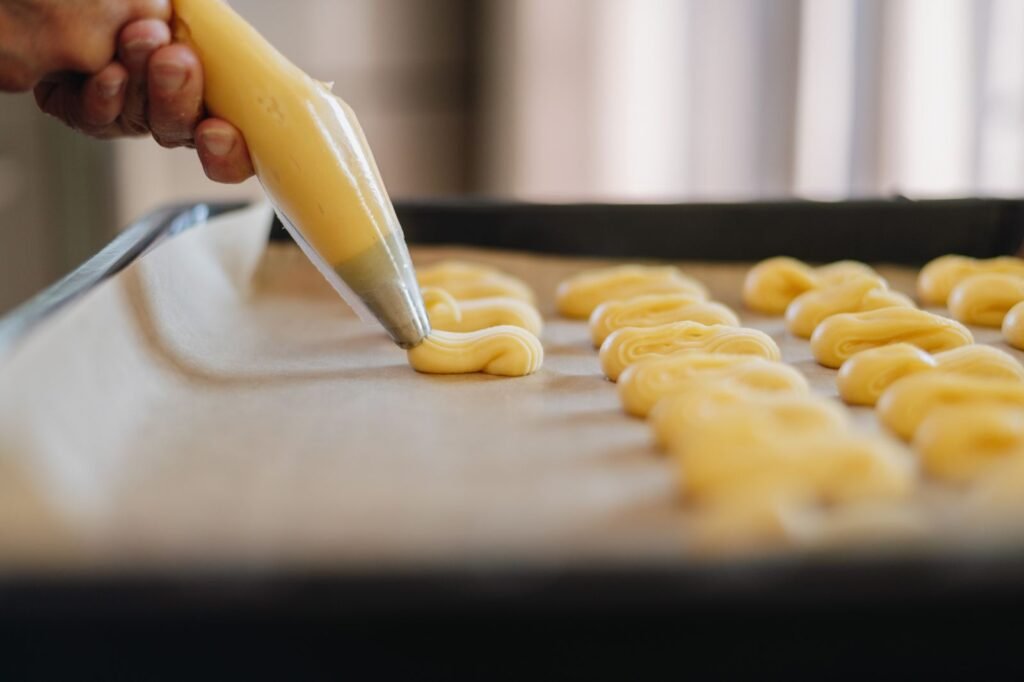
Step 6 — Bake until deeply golden
Bake at 200 °C (400 °F / Gas Mark 6) for 20 minutes without opening the door — the steam inside the puffs is doing the lifting, and cool air now can collapse them. Then reduce the heat to 180 °C (350 °F / Gas Mark 4) for a further 10–15 minutes to dry the centres. Judge by colour and feel: a finished puff is deep golden, light for its size, and sounds hollow when tapped. Pale, soft puffs collapse as they cool, however impressive they look in the oven.
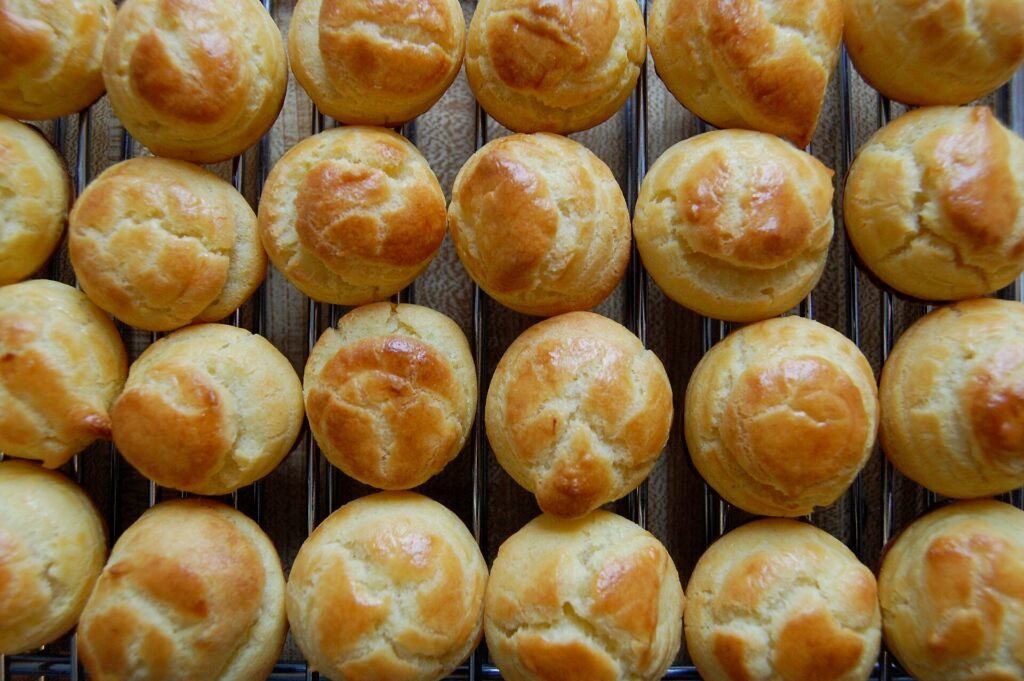
Step 7 — Pierce and dry
As soon as the puffs come out, pierce the side or base of each one with a skewer to let the steam escape — trapped steam makes shells soggy from the inside. Return them to the switched-off oven, door ajar, for 5 minutes to dry further, then cool completely on a wire rack before filling; warm shells melt cream.
Step 8 — Make the vanilla chantilly
Put the chilled cream, icing sugar and vanilla in a large cold bowl. Whip on medium speed to soft-medium peaks — the cream should stand in soft folds and just hold a peak that tips over gently. Chantilly taken too far turns grainy, then buttery. Keep refrigerated while you make the glaze.
Step 9 — Fill the puffs
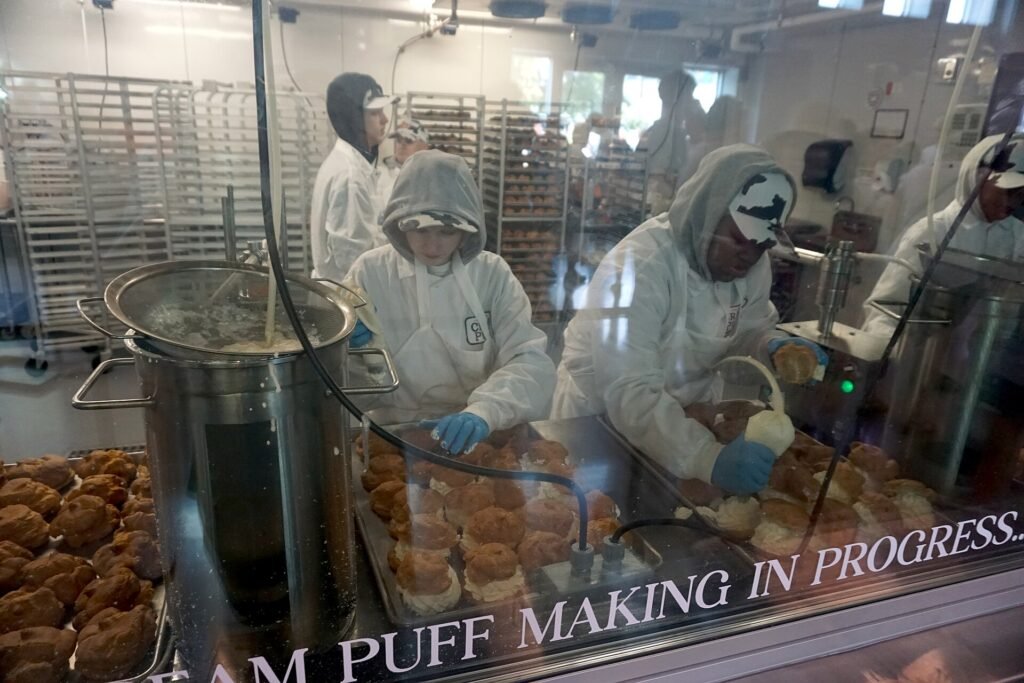
Turn each shell over and make a small hole in the base with a small nozzle or skewer, if the piercing hole has closed. Pipe the chantilly into each puff until it feels noticeably heavier and a little cream just peeks from the hole — roughly 2–3 tablespoons per puff. No piping bag? Split the shells horizontally with a serrated knife, spoon the cream in generously and set the lids back on.
Step 10 — Glaze, or dust, and serve
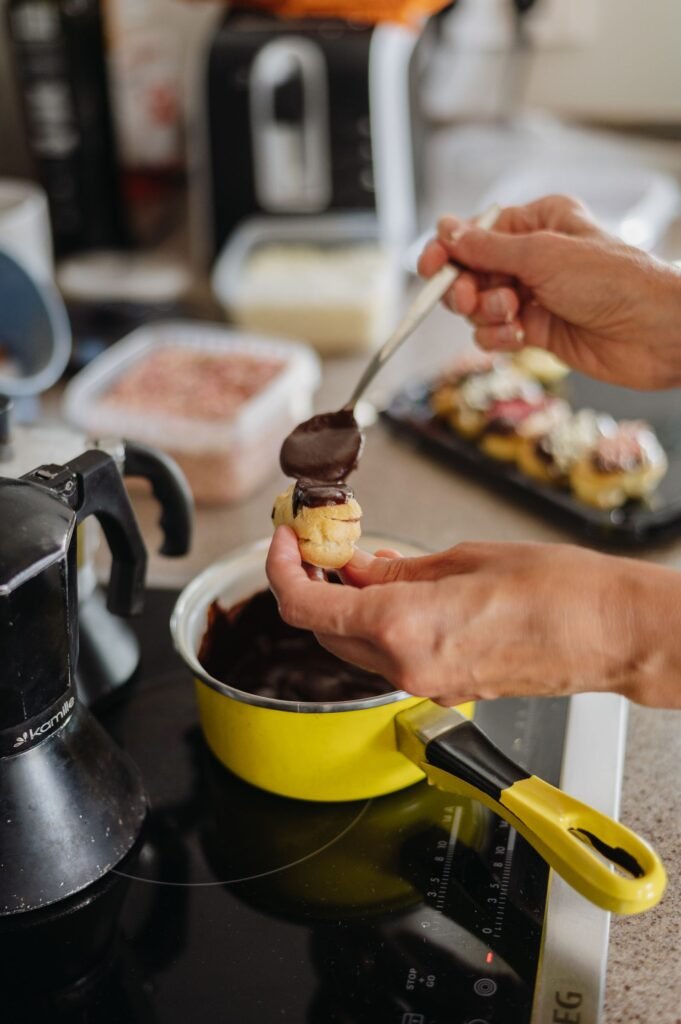
For the glaze: heat the cream to steaming (do not boil), pour it over the chopped chocolate in a heatproof bowl and rest for 2 minutes, then stir from the centre until glossy; stir in the butter last for shine. Dip the top of each filled puff into the warm glaze, let the excess drip back, and set upright for 10 minutes to firm. Alternatively, dust generously with icing sugar just before serving. Serve within a few hours of filling, while the shells are still crisp.
Tips for Perfect Results
- Dry the panade properly. The 2–3 minutes of cooking after the flour goes in is not optional — under-dried dough absorbs less egg and produces heavy, reluctant puffs.
- Judge the egg by texture, not just number. Egg sizes vary; the hanging V of dough from the spoon is a better guide than “4 eggs” alone.
- Colour is your doneness test. Deep golden brown means crisp and dry inside. If in doubt, split one puff: the centre should be mostly hollow, never wet and eggy.
- Respect the closed door. For the first 20 minutes the oven stays shut — watch through the glass instead.
- Fill late, serve soon. Fill no more than 3–4 hours before serving for maximum contrast between crisp shell and soft cream.
Variations and Substitutions
- Pastry cream filling (the classic alternative): whisk 4 egg yolks with 80 g (⅓ cup plus 1 tbsp) caster sugar and 30 g (¼ cup) cornflour (cornstarch). Bring 480 ml (2 cups) milk just to the boil with 2 tsp vanilla, pour over the yolks, whisk, then return to the pan and cook, whisking constantly, until thick and bubbling — about 2 minutes. Sieve, cover the surface with cling film and chill at least 2 hours. Whisk smooth before piping; fold through 120 ml (½ cup) whipped cream for a lighter crème légère.
- Éclairs: pipe the same dough into 10 cm (4 in) fingers instead of mounds, and bake, fill and glaze identically.
- Coffee or caramel: add 2 tsp instant espresso dissolved in 1 tsp hot water to the chantilly, or drizzle the filled puffs with salted caramel instead of chocolate.
- Savoury choux: leave out the sugar, fold 60 g (¾ cup) finely grated Gruyère and a pinch of cayenne into the dough after the eggs, and bake as gougères.
Storage and Make-Ahead
Unfilled shells keep in an airtight container at room temperature for 2 days, or frozen for up to 1 month. Recrisp in an oven at 180 °C (350 °F / Gas Mark 4) for 5 minutes and cool before filling. Filled puffs should be eaten the day they are filled; refrigerate leftovers and eat within 24 hours, accepting softer shells. The chantilly keeps, covered, in the fridge for 24 hours; the pastry cream keeps for 3 days with cling film pressed onto its surface.
For reliable storage guidance for baked goods and cream fillings, see the official US cold food storage chart.
FAQs
Why did my cream puffs collapse?
The usual causes are underbaking, pale shells, or opening the oven door during the first 20 minutes. The walls need to be deeply golden and fully dried to hold their shape as the steam inside condenses. Bake longer than you think, pierce on exit, and dry in the cooling oven.
Why are my shells soft instead of crisp?
Either they were underbaked, or they sat in their own steam after baking. Pierce every shell immediately, dry them in the switched-off oven, and cool on a rack rather than the hot tray.
Can I make the dough ahead of time?
Yes. Choux dough keeps, covered, in the fridge for up to 24 hours — rested dough often pipes more neatly. Bake straight from the fridge, adding a couple of minutes. Raw mounds can also be frozen solid and baked from frozen with about 5 extra minutes.
How do I know I have added enough egg?
Use the spoon test: lift a spoonful of dough and let it fall — it should drop slowly and leave a glossy V hanging from the spoon for a few seconds. Stiff dough that will not fall needs more egg; dough that slides off like batter has too much.
Can I fill cream puffs the night before?
It is not ideal — the shells absorb moisture from the cream and lose their crispness within hours. For next-day serving, store the shells airtight, make the chantilly in the morning, and fill and glaze a few hours before serving.
Helpful Tools
The right basics make choux far more consistent.
A large piping bag with a plain round nozzle gives you even mounds and a clean, bakery finish.
Choux depends on ratios, and digital scales take the guesswork out of the flour, butter and eggs.
A silicone mat keeps parchment from sliding and releases the baked shells cleanly.
An electric mixer makes adding the eggs effortless and whips chantilly in minutes.
Final Thoughts
Cream puffs reward a baker who trusts the process: a properly dried panade, eggs added with patience, and a hot oven left firmly shut. Master this one dough and you own éclairs, profiteroles and gougères too. For another make-ahead dessert, try our chocolate peanut butter parfait. You may also enjoy our cannoli cream puffs and these Italian Christmas cookies.
Photo credits: choux buns photo via Wikimedia Commons (CC BY 2.0); cream puff production photo via Wikimedia Commons (CC BY-SA 4.0).