
Spicy Gochujang Eggs Recipe Is Addictive
There are some recipes that quietly enter your kitchen and then completely take over your cravings.
This Spicy Gochujang Eggs recipe is exactly that kind of dish.
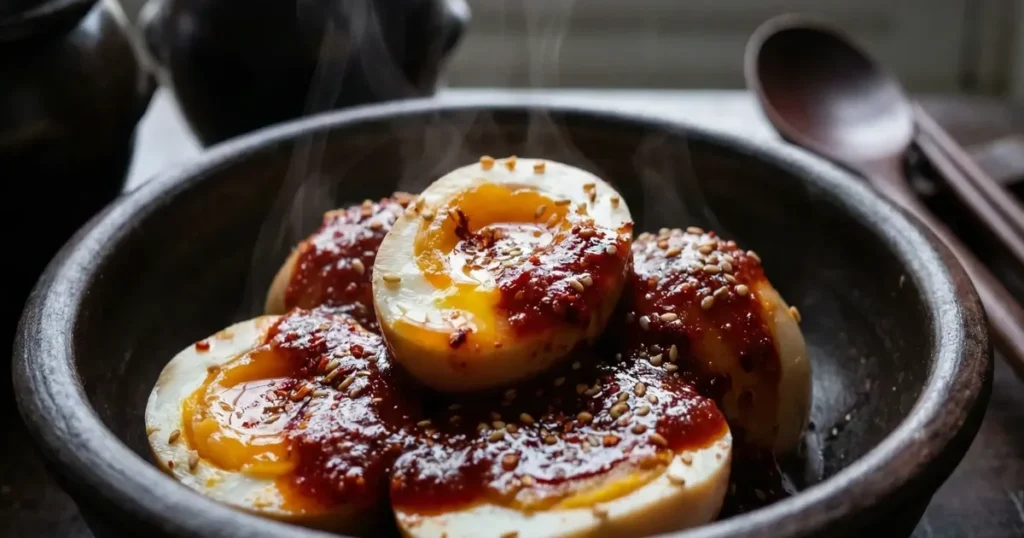
Imagine this: soft boiled eggs with jammy centers, gently cracked open and bathed in a glossy, fiery-red sauce made with Korean gochujang, garlic, and a hint of sweetness. The aroma is bold, slightly smoky, and deeply comforting. One bite gives you heat, umami, and richness all at once the kind of flavor that makes you go back for “just one more” egg… and then another.
Whether you serve it with rice, toast, or eat it straight from the bowl, these eggs have a way of stealing the spotlight.
This recipe became addictive in my kitchen because it’s:
- Fast enough for busy days
- Bold enough to feel special
Simple enough for beginners
Ingredients List
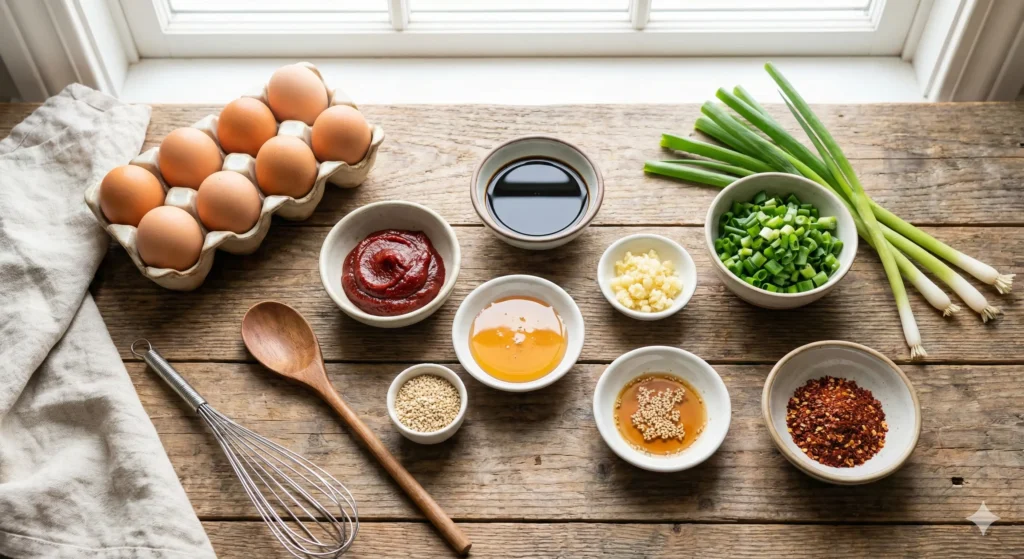
For the Eggs
- 6 large eggs
- Water for boiling
For the Spicy Gochujang Sauce
- 2 tablespoons gochujang (Korean chili paste)
- 1 tablespoon soy sauce
- 1 tablespoon honey or brown sugar
- 1 teaspoon rice vinegar
- 1 teaspoon sesame oil
- 2 cloves garlic, finely minced
- 1 teaspoon chili flakes (optional, for extra heat)
For Garnish
- Toasted sesame seeds
- Finely chopped green onions
Substitution Suggestions
- No gochujang? Use chili garlic sauce + a little miso for depth
- Soy-free: Replace soy sauce with coconut aminos
- No honey: Use maple syrup or date syrup
- Garlic-sensitive: Reduce garlic or use garlic-infused oil
Dietary Swaps
- Vegan: Use firm tofu slices instead of eggs
- Gluten free: Ensure gochujang and soy sauce are certified gluten free
- Low sodium: Use low sodium soy sauce and reduce quantity
Timing
- Prep Time: 5 minutes
- Cook Time: 8 minutes
- Total Time: 13 minutes
This recipe is incredibly time efficient because the sauce comes together while the eggs boil. No marinating, no long simmering just quick, high impact flavor.
How to Make It
Step 1: Boil the Eggs
Bring a pot of water to a rolling boil. Gently lower in the eggs and boil for 7 8 minutes for jammy centers. Immediately transfer to ice water to stop cooking.

Tip: Slightly undercooked eggs absorb the sauce better.
Step 2: Make the Gochujang Sauce
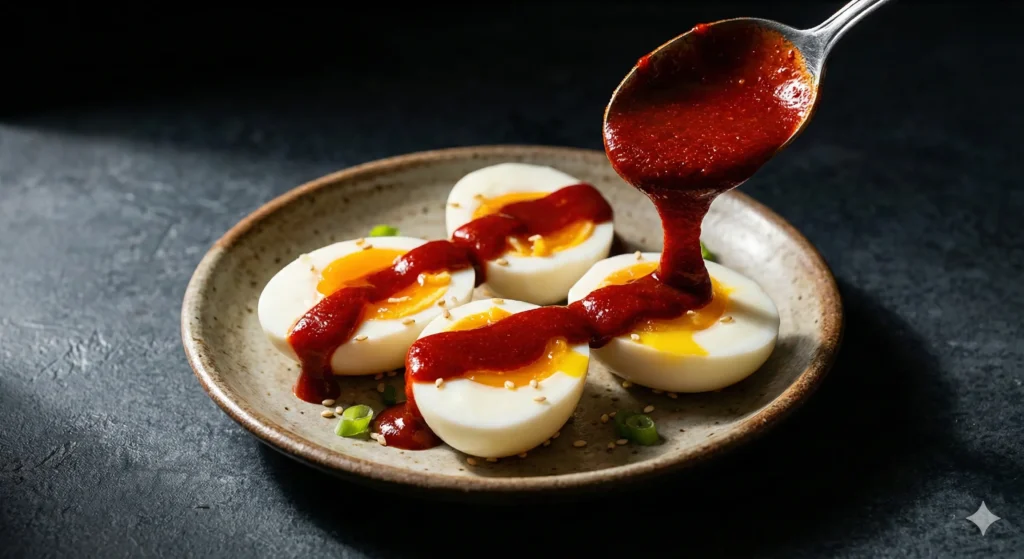
In a small bowl, whisk together gochujang, soy sauce, honey, rice vinegar, sesame oil, garlic, and chili flakes. The sauce should be thick, glossy, and deeply red.
Sensory cue: It should smell spicy, savory, and slightly sweet.
Step 3: Peel and Crack the Eggs
Peel the eggs carefully. Lightly crack or slice them in half to expose the yolk this helps the sauce cling beautifully.
Step 4: Coat and Serve
Toss the eggs gently in the sauce or spoon the sauce generously over them. Finish with sesame seeds and green onions.
Nutritional Information (Per Serving – 2 Eggs)
- Calories: 220 kcal
- Protein: 14 g
- Fat: 12 g
- Carbohydrates: 10 g
- Fiber: 2 g
- Sodium: 480 mg
Eggs provide high quality protein and healthy fats, while gochujang adds fermented benefits that support gut health. This dish keeps you full and energized without feeling heavy.
Healthier Alternatives
- Lighter version: Use soft poached eggs and reduce sauce quantity
- Low carb: Serve with sautéed spinach instead of rice
- Vegan: Replace eggs with baked tofu or roasted mushrooms
- Blood sugar friendly: Use monk fruit sweetener instead of honey
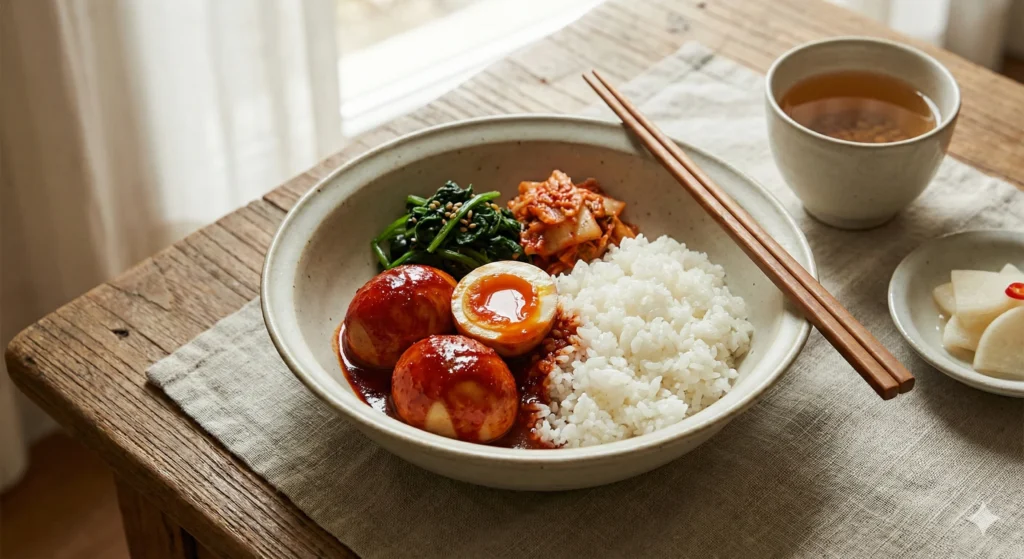
Serving Suggestions
- Over steamed jasmine or brown rice
- With buttered toast or sourdough
- As a ramen or noodle topping
- Alongside sautéed greens
- With iced green tea or lemon water
Common Mistakes to Avoid
- Overcooking the eggs dry yolks reduce creaminess
- Using cold eggs straight from the fridge (can crack while boiling)
- Skipping the ice bath eggs keep cooking internally
- Adding too much sauce at once balance is key
Storing Tips
Refrigeration
Store cooked eggs with sauce in an airtight container for up to 3 days.
Reheating
Gently reheat on low heat or enjoy cold avoid microwaving too long.
Make-Ahead
Sauce can be prepared up to 5 days in advance.
Freezing
Not recommended eggs change texture after freezing.
Conclusion
This Spicy Gochujang Eggs recipe proves that simple ingredients can create unforgettable flavor. It’s bold, comforting, and endlessly customizable perfect for busy mornings, lazy dinners, or protein-packed snacks.
Try it once, adjust the spice to your liking, and don’t be surprised if it becomes a weekly craving. If you make it, share it, pin it, and let your kitchen fall in love with gochujang.
Frequently Asked Questions (FAQs)
1. Are gochujang eggs very spicy?
They’re moderately spicy, but you can easily adjust the heat.
2. Can I use hard-boiled eggs?
Yes, but soft or jammy eggs absorb flavor better.
3. Is gochujang healthy?
Yes, it’s fermented and rich in flavor, so a little goes a long way.
4. Can kids eat this?
Reduce chili and sweetness for a milder version.
5. Can I meal prep this recipe?
Absolutely. It keeps well for short-term meal prep.
6. What can I use instead of eggs?
Tofu, mushrooms, or even roasted cauliflower work well.
7. Can I make it oil-free?
Yes, omit sesame oil and add a splash of warm water instead.